


Vehicle VEHICLE

New interactive four-legged off-road mobility

New interactive
four-legged off-road mobility

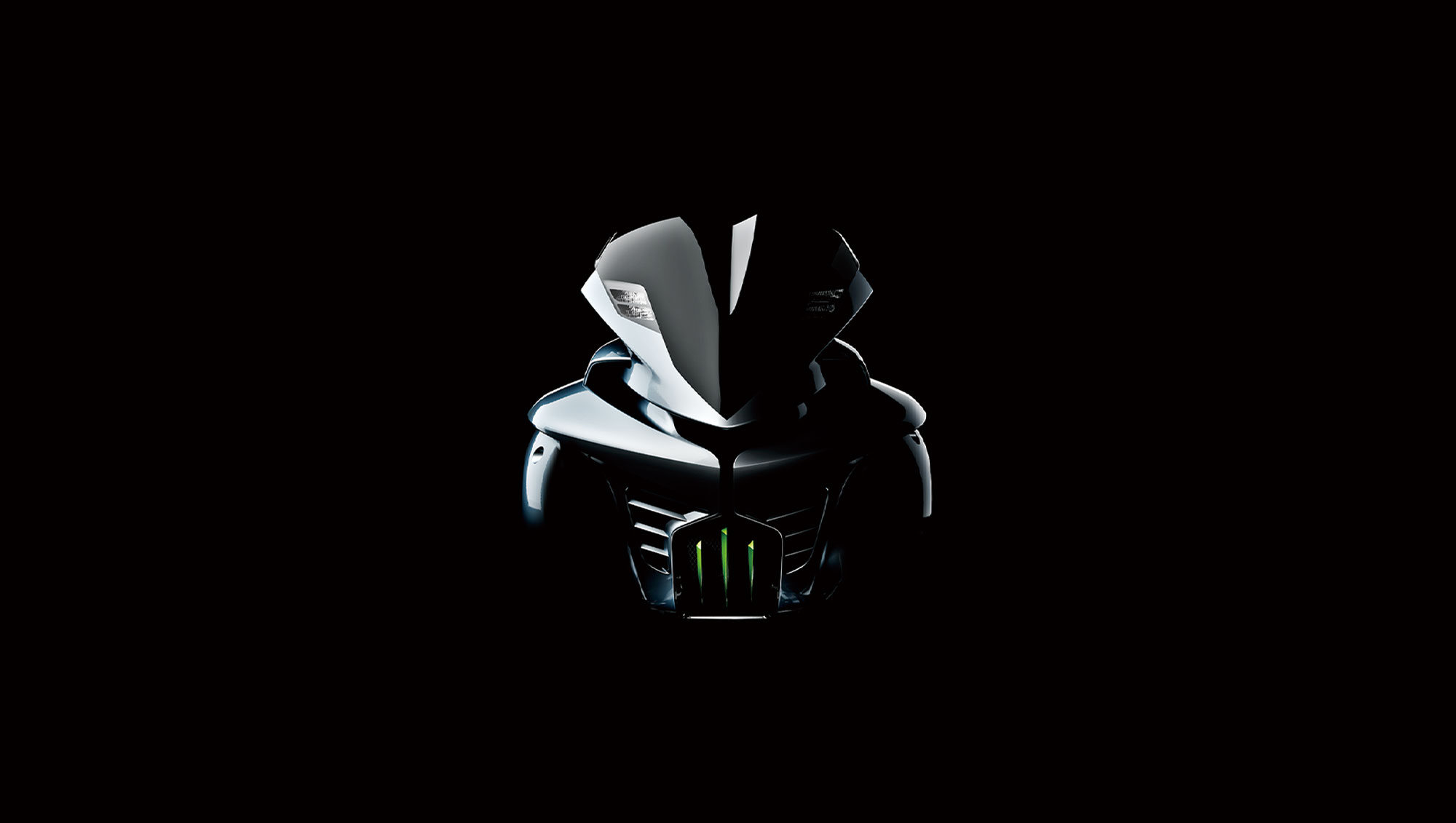
CORLEO, a four-legged off-road mobility vehicle, detects the rider’s intended movements through shifts in their center of gravity, enabling both safe and thrilling riding.
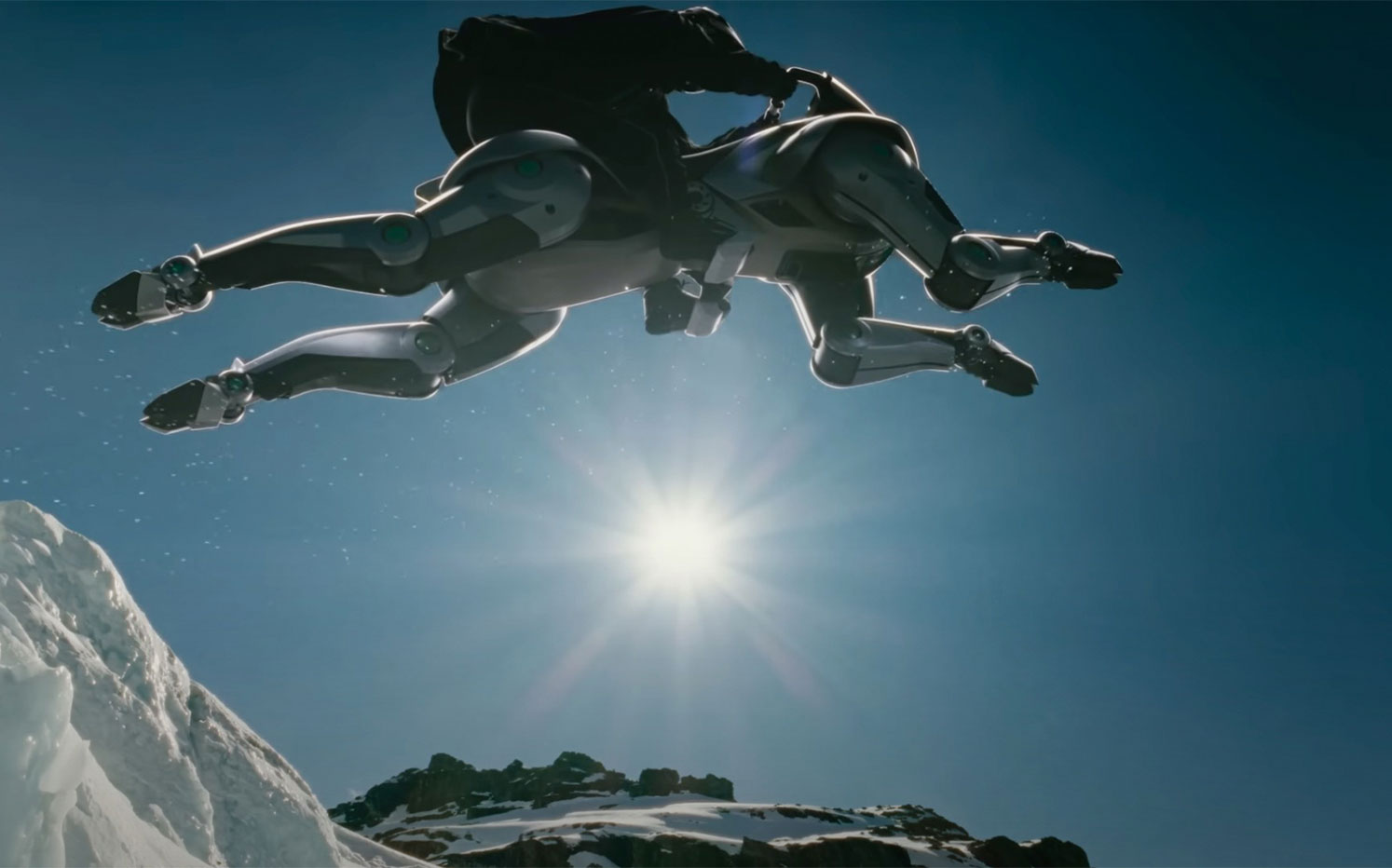
It traverses rocky terrain and forests as though stepping over obstacles, allowing riders to enjoy new scenery beyond the beaten path.
CORLEO is a completely new kind of mobility, born from the Kawasaki Heavy Industries Group’s accumulated expertise in motorcycle and robotics development.

CORLEO, a four-legged off-road mobility vehicle, detects the rider’s intended movements through shifts in their center of gravity, enabling both safe and thrilling riding. It traverses rocky terrain and forests as though stepping over obstacles, allowing riders to enjoy new scenery beyond the beaten path. CORLEO is a completely new kind of mobility, born from the Kawasaki Heavy Industries Group’s accumulated expertise in motorcycle and robotics development.

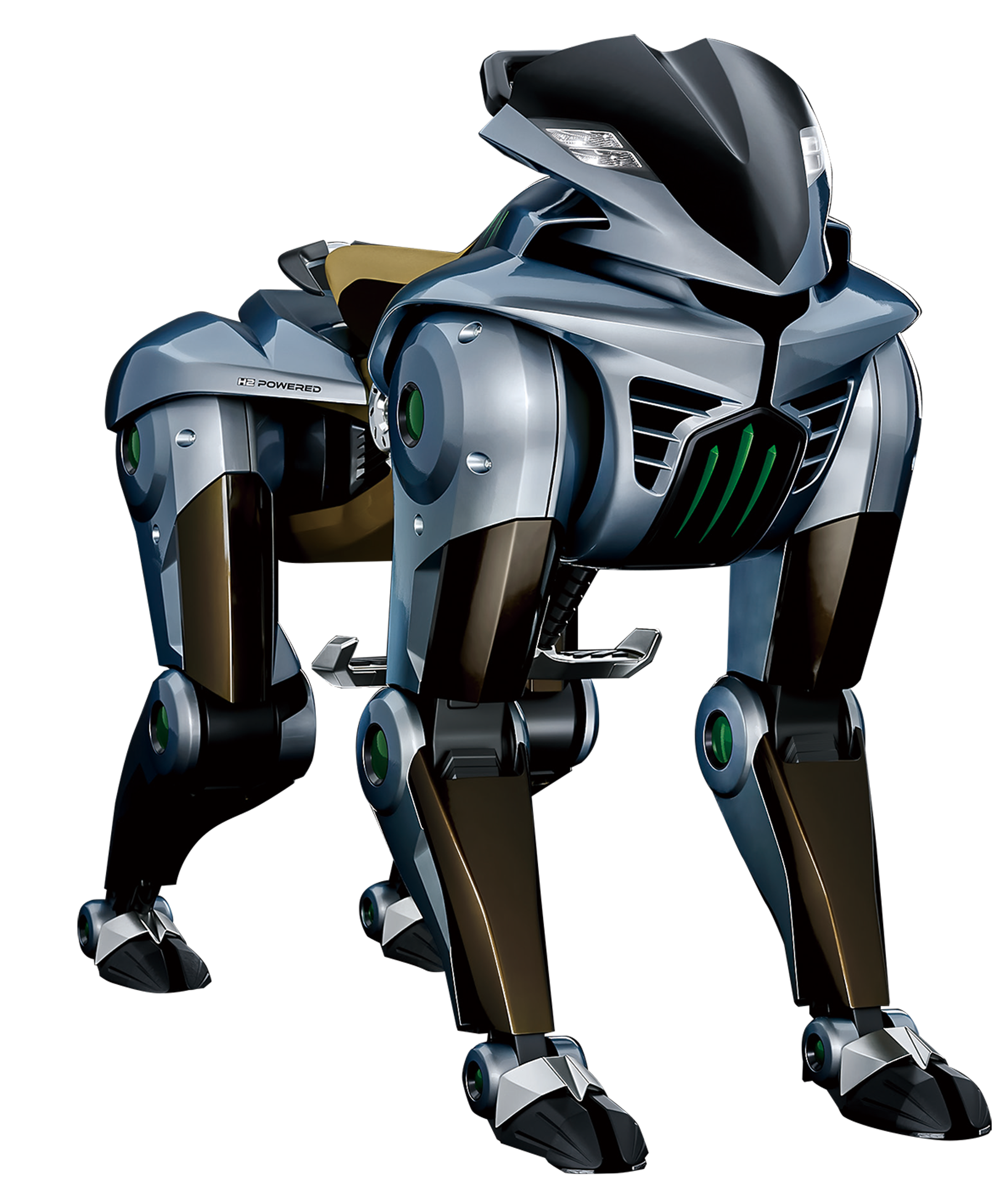
CORLEO vehicle

Swingarm Mechanism

A movable shaft is installed in the mid-section of the chassis to enable the rear-leg mount to swing vertically relative to the front-leg mount, which helps absorb the impact and vibration generated during walking and running. When travelling over bumps or up hills, the rider does not have to face upward and can easily check the terrain ahead.

Power Unit

CORLEO employs a series hybrid system that uses a 150 cc hydrogen engine for electricity generation to power actuators located in the four legs and body. Compact size, light weight, and high output are achieved through the use of a turbocharged two-stroke engine.

Cooling System

A radiator for cooling the engine and an intercooler for cooling intake air are housed in the front section of the chassis to achieve efficient layout. The temperatures of the engine and intake air are appropriately controlled to help improve the stability of hydrogen combustion.

Stirrups

Together with the handholds, the stirrups detect the rider’s weight shifts. The length of the stirrups is automatically adjusted by the machine to help the rider maintain the optimal posture at all times.

Leg Suspension

The suspension is designed to achieve smooth bending and stretching movements of the legs, securing a broad range of flexible motion to support a comfortable ride and dynamic actions, including agile jumps.

Rubber Hoof

The legs have left-and-right split cloven hooves made of rubber, a slip-resistant material that absorbs surface irregularities. They help stabilize the vehicle on all types of terrain, including grassland, rocky ground, and loose gravel. In addition, by absorbing impact on contact with the ground, the structure helps minimize shock-absorbing control operations in the legs, thereby reducing energy consumption.

CORLEO vehicle

Swingarm Mechanism

A movable shaft is installed in the mid-section of the chassis to enable the rear-leg mount to swing vertically relative to the front-leg mount, which helps absorb the impact and vibration generated during walking and running. When travelling over bumps or up hills, the rider does not have to face upward and can easily check the terrain ahead.

Power Unit

CORLEO employs a series hybrid system that uses a 150 cc hydrogen engine for electricity generation to power actuators located in the four legs and body. Compact size, light weight, and high output are achieved through the use of a turbocharged two-stroke engine.

Cooling System

A radiator for cooling the engine and an intercooler for cooling intake air are housed in the front section of the chassis to achieve efficient layout. The temperatures of the engine and intake air are appropriately controlled to help improve the stability of hydrogen combustion.

Stirrups

Together with the handholds, the stirrups detect the rider’s weight shifts. The length of the stirrups is automatically adjusted by the machine to help the rider maintain the optimal posture at all times.

Leg Suspension

The suspension is designed to achieve smooth bending and stretching movements of the legs, securing a broad range of flexible motion to support a comfortable ride and dynamic actions, including agile jumps.

Rubber Hoof

The legs have left-and-right split cloven hooves made of rubber, a slip-resistant material that absorbs surface irregularities. They help stabilize the vehicle on all types of terrain, including grassland, rocky ground, and loose gravel. In addition, by absorbing impact on contact with the ground, the structure helps minimize shock-absorbing control operations in the legs, thereby reducing energy consumption.

technology Technology

Robotics

Robotics

The flexible motion of the four-legged structure helps absorb impact on contact with the ground and stabilize travelling performance. It is achieved by synchronously controlling drive shafts using a torque controller along with a controller with a cycle time of less than one millisecond. In addition, a method known as “adaptive shared control” adjusts the level of autonomous control intervention according to the rider’s skill level, thereby avoiding hazards. Commands that could result in jumping off a cliff, for example, are appropriately corrected, while those that involve a certain degree of risk are allowed for riders with high maneuvering skills.
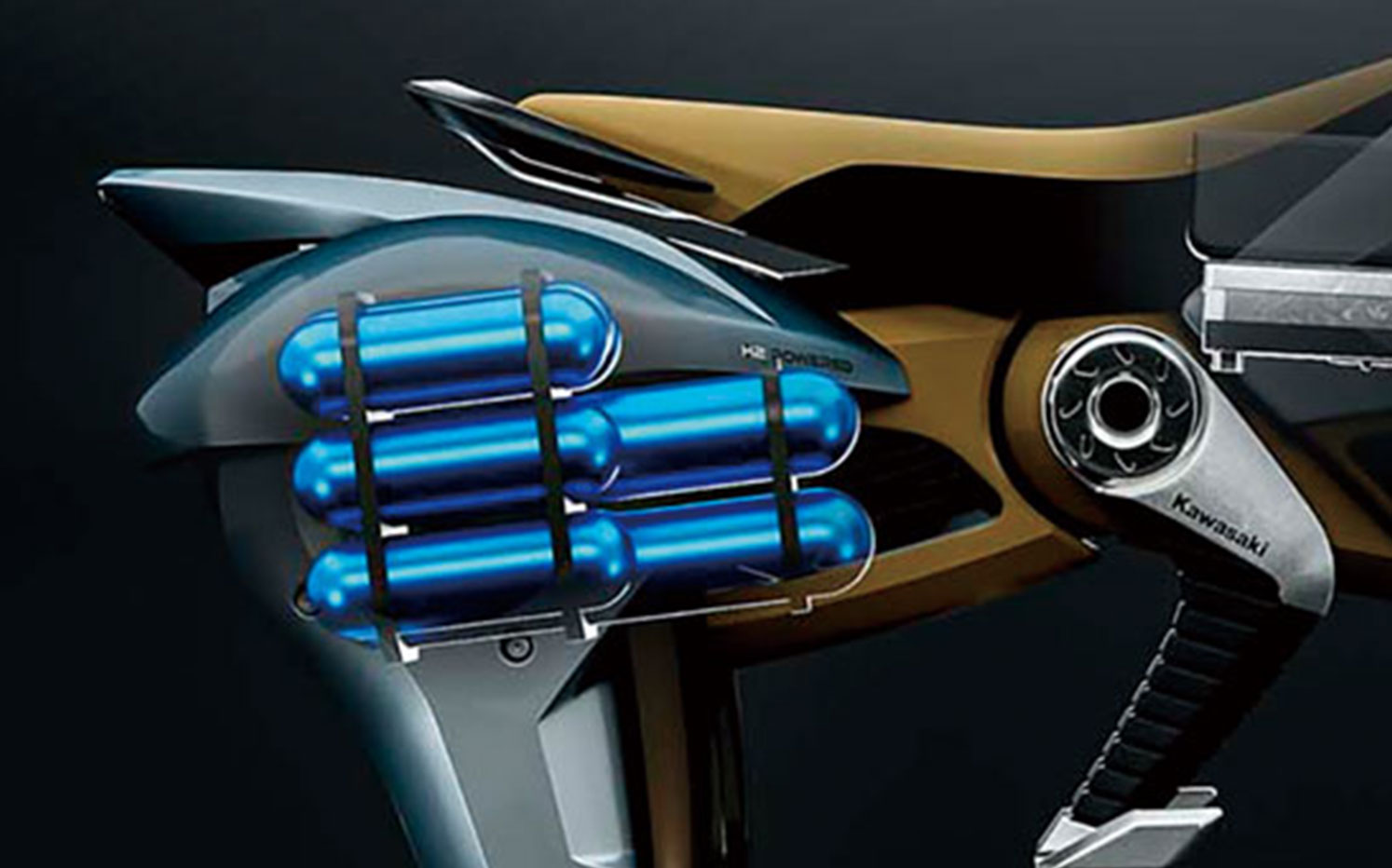
Hydrogen Canister

Hydrogen Canister

Hydrogen storage alloy canisters are employed for fuel storage to enable efficient layout within the limited onboard space. Hydrogen is supplied from canisters housed in the rear leg section to the engine. In addition, the canisters can be easily removed and swapped, allowing CORLEO to be refueled anywhere as long as spare canisters are at hand.

Appearance

Appearance

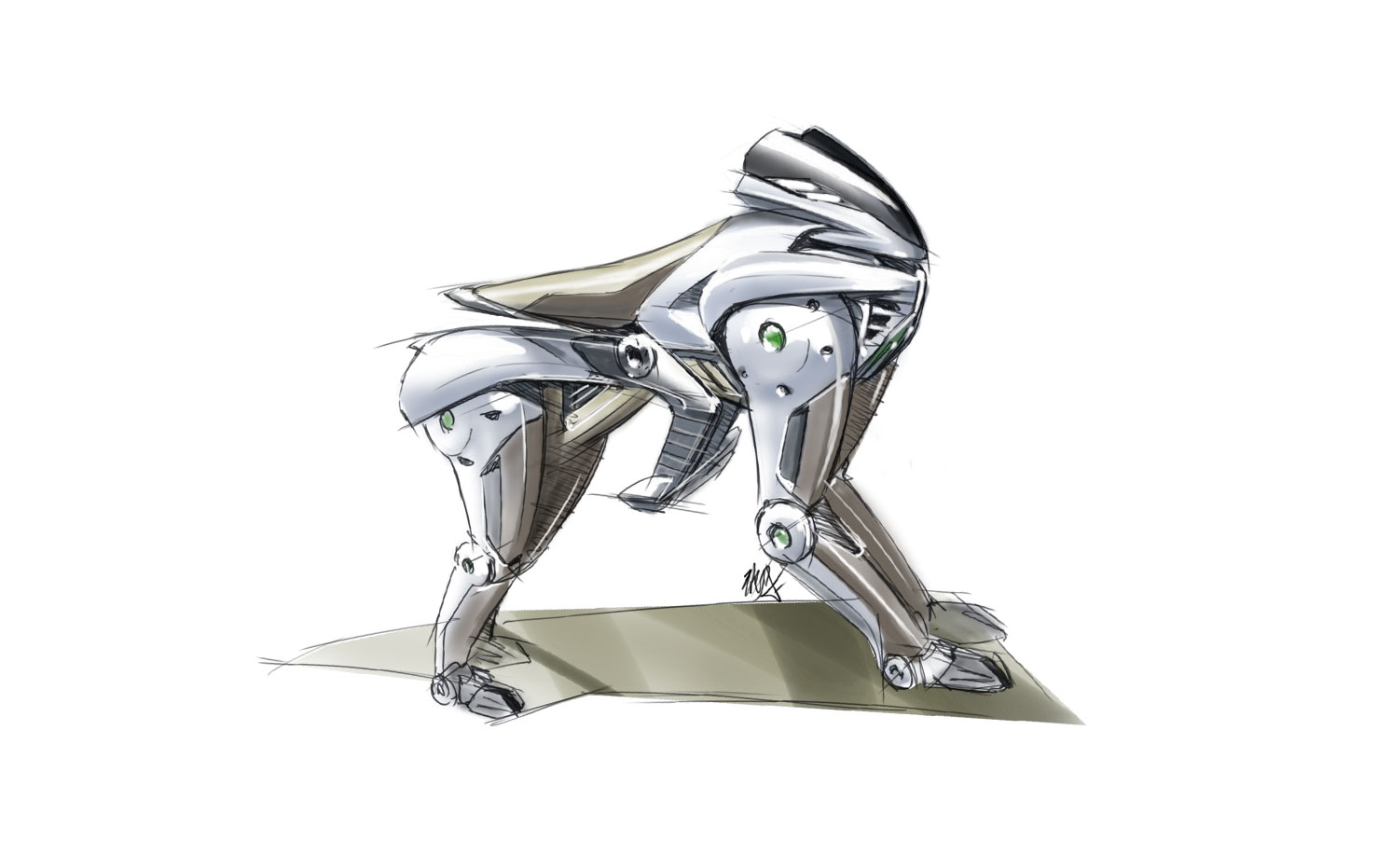
CORLEO is designed to embody a sense of approachability and dynamism inspired by animals while incorporating the physical feasibility required of a mobility vehicle. It also features Kawasaki’s traditional qualities of being “powerful” and “sporty,” which were refined through the company’s work in developing motorcycles. In addition, ergonomics verification tests were conducted using a clay mock-up with the cooperation of the equestrian club of Kobe University. The tests verified points such as the sense of stability when riding CORLEO, and confirmed that the proportions that would not interfere with the rider during operation. This feedback was used to establish a more comfortable riding position.